Meta’s latest policy shift is reshaping how businesses can use AI on WhatsApp. The move raises questions about automation, data control, and the future role of generative AI in customer engagement. As the messaging landscape evolves, companies must rethink how they balance innovation with trust. MEF CEO Dario Betti explains what this means for the industry.
When Meta moved to ban third-party AI chatbots from the WhatsApp Business API (the decision was a cold shower across customer support, marketing, and conversational commerce teams that had embraced generative AI to scale conversations.
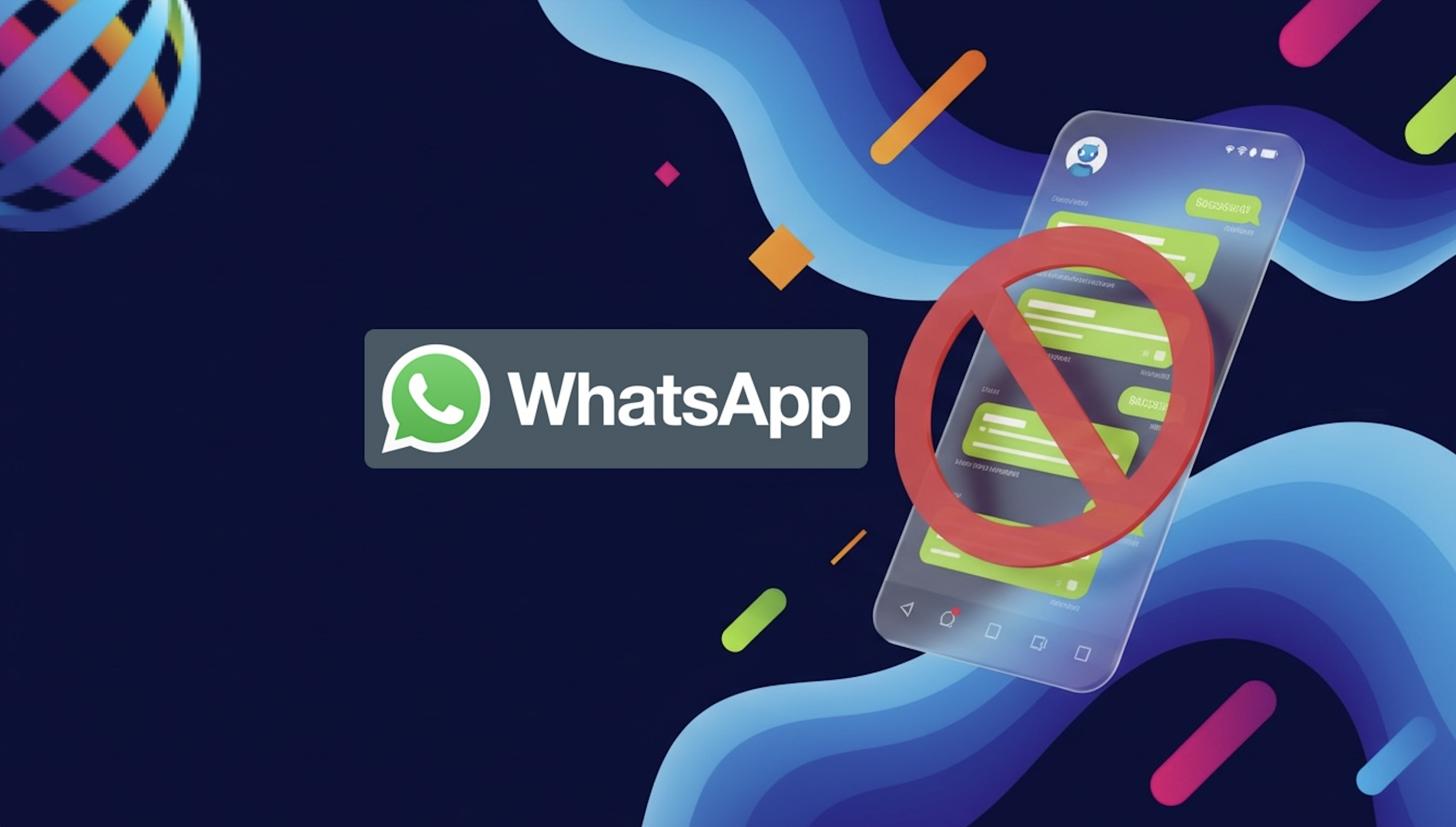
As reported by Dataconomy on October 18, 2025, Meta instructed partners to disable integrations that let autonomous AI agents respond directly to users inside WhatsApp threads. The message is clear: WhatsApp will continue to support structured automation and human service, but it no longer wants unvetted, freeform AI speaking on the platform’s behalf.
The new policy, which takes effect January 15, 2026, explicitly targets what Meta calls “AI Providers”, companies offering large language models, generative AI platforms, or general-purpose AI assistants where such technology is “the primary (rather than incidental or ancillary) functionality being made available for use.” This language is detailed in the updated terms from Meta, and it effectively bans services like OpenAI’s ChatGPT on WhatsApp (launched December 2024), Perplexity’s AI assistant (launched April 2025), and Latin America-focused chatbot Luzia, along with General Catalyst-backed Poke.
AI is not ‘unwelcome’ on WhatsApp; it is that AI must now operate in service of, not instead of, human support.”
Why META ‘banned’ AI providers
To understand the shift, it helps to recall how WhatsApp automation evolved. For years, WhatsApp APIs permitted narrowly defined workflows such as approved message templates for notifications, quick replies, menus, and strict rules on opt-in, timing, and escalation to a human. Over the last 18 months, however, many businesses layered large-language-model agents onto that framework. These bots didn’t just fetch order statuses or route tickets; they attempted open-ended support, lead qualification, and sales conversations in fluid natural language. Some experiences delighted customers. Others delivered hallucinated answers, ventured into sensitive topics, or quietly shipped personal data to external AI processors.
Meta’s intervention appears aimed at these failure modes. Messaging is intimate and high-trust: a poorly grounded AI answer about a medical product, a financial claim, or even a simple warranty can quickly erode user confidence and expose platforms to regulatory scrutiny. WhatsApp’s policies have always emphasized predictability via approved templates, visible consent, and a clear path to a human. Autonomous LLMs (Large Language Models) challenge that predictability. There is also a privacy dimension. Many third-party bots forward message content to external AI vendors, raising complex questions about data processing grounds, retention, and cross-border transfers. By cutting off autonomous AI replies at the API level, Meta reasserts control over safety, privacy, and the overall quality of the WhatsApp experience.
Technically Meta lamented that third-party chatbots placed unexpected burdens on WhatsApp’s systems with increased message volume and required “a different kind of support” the company wasn’t prepared to provide. These chatbot operations generated massive volumes of back-and-forth messages, media uploads, and voice interactions, traffic exceeding what business-to-customer support expectations.
Disrupting businesses’ existing AI visions
For businesses, the near-term impact is practical and immediate, but the number of business affected are potentially few.
Any workflow that relies on a third-party model composing answers directly in WhatsApp should be retired or redesigned. That does not mean the end of automation on the channel. Template-based notifications, structured menus, approved marketing flows, and human service all remain viable when configured within policy. The strategic adjustment is to move the AI from the front of the conversation to the back office.
Importantly, the change doesn’t affect companies and services that use AI as part of their WhatsApp-based customer support workflow, such as a travel company running a bot for customer service. Instead, it affects those bots that use the app itself as a front-end for direct, general-purpose chatbot interactions.
AI can prepare agents to speak better: classify intents, retrieve answers from knowledge bases, draft responses for human approval, summarize long threads, and flag risk or sentiment. This “agent-assist” posture aligns with WhatsApp’s rules while preserving many of the efficiency gains that made autonomous bots attractive in the first place.
Making the transition requires more than toggling a setting. Teams should inventory every automated touchpoint on WhatsApp and document where an AI system generates text that the customer sees. Those points need either a compliant alternative: templates, macros, or human responses, or a redesign that keeps AI behind the scenes.
The privacy story needs tightening too: if transcripts are analysed by AI systems, the data flows should be governed by proper processing agreements, redaction where possible, encryption in transit and at rest, and retention limits that match legal and business needs. Customer-facing disclosures should reflect any AI use in agent-assist, even if the model never speaks directly in WhatsApp.
A new use case?
There might be a business logic at play. WhatsApp’s Business API is one of Meta’s sizable revenue generators, charging businesses per message based on categories like marketing, utility, authentication, and support. However, there was no pricing framework for AI bots, meaning companies like OpenAI and Perplexity could run large-scale chatbots on WhatsApp while Meta earned little, if anything, from the surge in usage. Clearing out the use case boundaries might help to reset a new future revenue mechanism.
The Emergence of META’s own AI
The decision effectively makes Meta AI the sole general-purpose chatbot on WhatsApp. Meta AI was launched in August 2024 and Meta CEO’s Zuckerberg reported in May 2025 that it had already reached one billion monthly users.
Meta’s move signals a broader trend in messaging: platforms are likely to offer their own sanctioned AI features with explicit guardrails rather than cede the user experience to uncontrolled third parties. In the medium term, we should expect more native “assistive” tools, searchable knowledge retrieval for agents, suggested replies, and on-platform safety filters. This could be a way for Meta to open to its own specific AI solutions in future. Vendors in the WhatsApp ecosystem will not be completely cut out, they could adapt by emphasizing compliance-first orchestration, CRM integrations, and tools that measure and document human oversight.
The Bottom Line
AI is not ‘unwelcome’ on WhatsApp; it is that AI must now operate in service of, not instead of, human support. Companies that pivot quickly, replacing autonomous replies with agent-assist, strengthening consent and data governance, and refining their template and escalation design could retain the channel’s reach without courting enforcement risk. For those who invested heavily in end-to-end bot conversations, the adjustment may feel like a retreat.
It may also shows that Meta is getting serious at launching more of its own AI tools and services, and it is clearing up some of the other options that might eventually emerge as competitors in its own service.
In reality, it’s a rebalancing toward reliability in a space where trust is the product.